
 My CV
My CV ResearchGate
 ORCID
ORCIDAbout Me
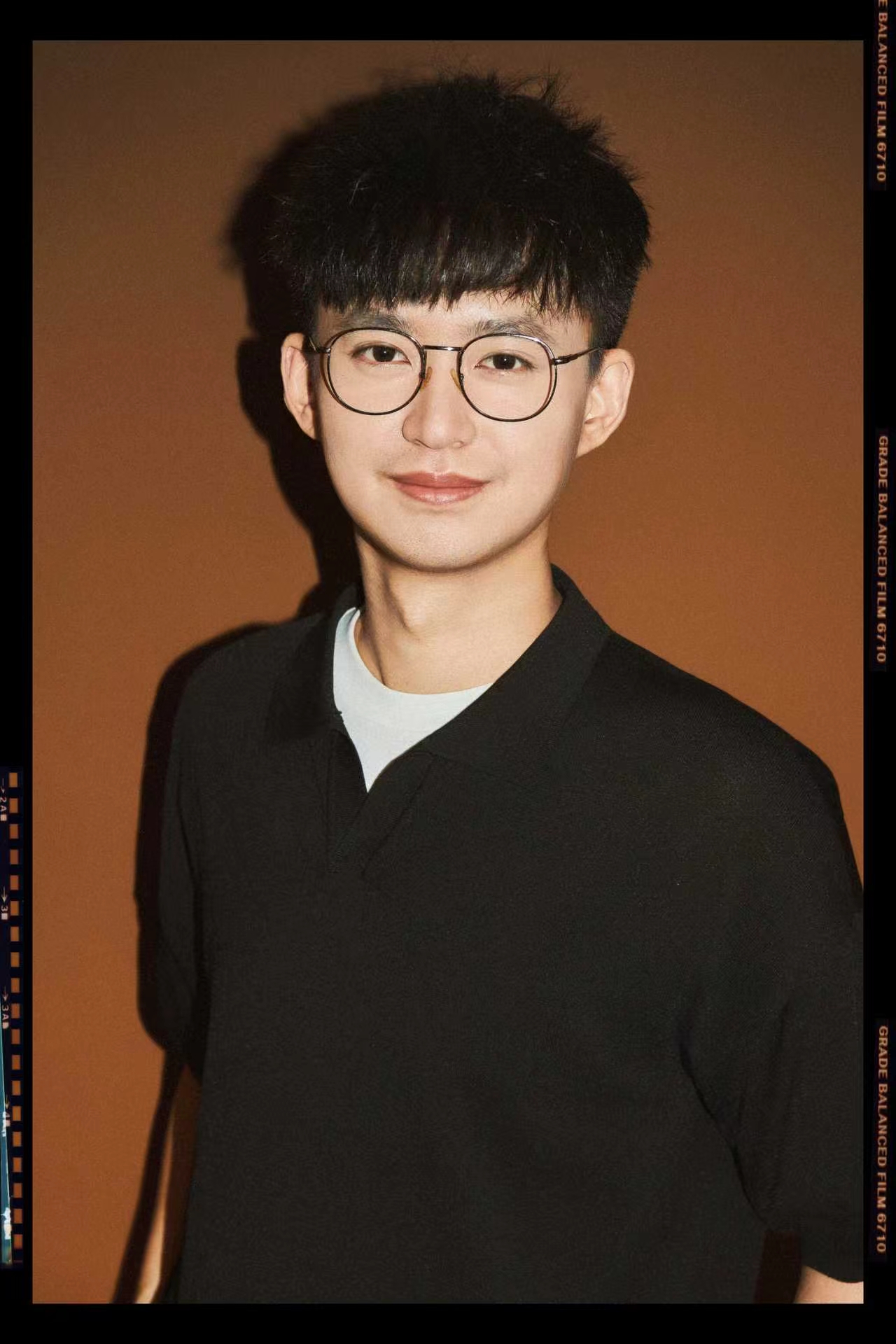
Hi, this is Peiyi He! Welcome!
I am a final year Ph.D. candidate in the Department of Electrical and Computer Engineering at The University of Hong Kong, supervised by Prof. Can Li.
Currently, my research focuses on various memristor-based content-addressable memory chip design, such as ternary CAM and analog CAM, for fast and efficient nearest neighbor search, with applications ranging from genomic analysis to artificial intelligence.
Prior to Hong Kong, I received my B.Eng. degree from School of Integrated Circuits, Tsinghua University in 2023, where I worked on content addressable memory design for few-shot learning as my final-year project. During my undergraduate studies, I was also fortunate to have the opportunity to complete a summer research internship at Hong Kong University of Science and Technology. If you are interested in my research and looking for academic discussion, feel free to reach out to me through email!
Research Interests
- In-memory Computing
- Neuromorphic Computing
- Bioinformatics
- Nearest Neighbor Search
News and Updates
- November 2026: Presented a research talk, “Towards fast and efficient genomic analysis with analog in-memory computing hardware”, at Arch4Health Workshop, held in conjunction with MICRO 2026.
- July 2026: Awarded HKU Foundation Publication Award for Research Postgraduate Students 2026.
- December 2025: I have been awarded NSFC Young Student Basic Research Program 2025 (国家自然科学基金青年学生基础研究项目).
- August 2025: One paper about real-time genomic analysis is accepted by Nature Computational Science. Cheers!
- June 2024: ShiftCAM is accepted by ICCAD 2024. See you in New York!
Selected Publications
-
ShiftCAM: A Time-Domain Content Addressable Memory Utilizing Shifted Hamming Distance for Robust Genome Analysis
Peiyi He, Ruibin Mao, Keyi Shan, Yunwei Tong, Zhicheng Xu, Muyuan Peng, Ruibang Luo, and Can Li.
The 43rd IEEE/ACM International Conference on Computer-Aided Design (ICCAD 2024). New York, USA. October, 2024. -
Real-time raw signal genomic analysis using fully integrated memristor hardware
Peiyi He, Shengbo Wang, Ruibin Mao, Mingrui Jiang, Sebastian Siegel, Giacomo Pedretti, Jim Ignowski, John Paul Strachan, Ruibang Luo, Can Li.
Nature Computational Science 5, 940–951, 2025.
© 2026 Peiyi He. Published with GitHub Pages, powered by Jekyll.